
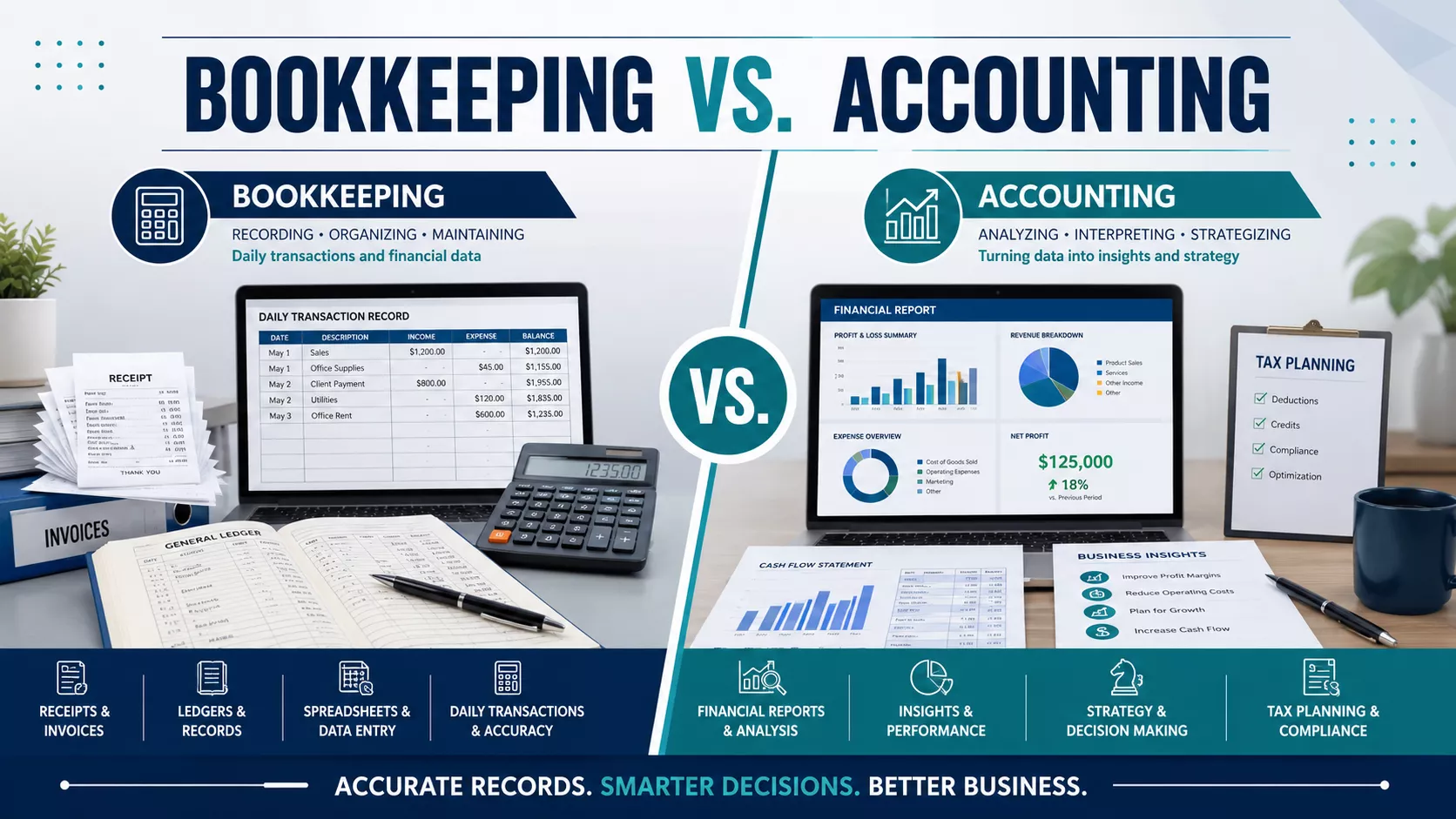
Understanding the difference between bookkeeping and accounting is essential for managing your business finances effectively. Although the two functions serve different purposes, they work together to maintain accurate financial records, support HMRC compliance, and provide valuable insights for business growth. This guide explains what bookkeeping and accounting are, how they differ, why both are important, and how they contribute to better financial management.
You'll learn the key responsibilities of bookkeepers and accountants, the benefits each service provides, and when it is the right time to hire a professional as your business grows. The guide also explains how to choose the right bookkeeper or accountant in London, what qualities to look for, and how professional financial support can improve cash flow, tax planning, decision-making, and long-term profitability. Finally, you'll find answers to frequently asked questions to help you choose the right financial solution for your business with confidence.
What is Bookkeeping?
Bookkeeping is the process of recording and organising financial transactions for a business. It keeps a clear record of every sale, purchase, payment, receipt, and expense. Good bookkeeping helps business owners understand where their money comes from and where it goes. It also creates accurate financial records that support day-to-day business decisions.
A bookkeeper records daily financial transactions and keeps all business records up to date. They track income, expenses, supplier payments, customer invoices, and cash received. They also check bank statements against business records through bank reconciliation. This helps find mistakes early and keeps the accounts accurate.
Bookkeeping also provides the information needed to prepare simple financial reports, such as income statements and balance sheets. These reports show how a business is performing and give a clear picture of its financial position. Accountants often use these records to prepare tax returns and provide financial advice, making accurate bookkeeping an essential first step.
Many businesses now use cloud-based bookkeeping software like Xero, QuickBooks, and FreeAgent. These tools make it easier to record transactions, manage invoices, track cash flow, and create reports. They also save time by reducing manual work.
Accurate bookkeeping is important for every business. It helps owners monitor cash flow, make informed financial decisions, and meet HMRC tax requirements. Well-kept financial records reduce errors, support business growth, and ensure financial information is always ready when needed. Good bookkeeping gives business owners confidence that their accounts are organised, reliable, and compliant.
What is Accounting?
Bookkeeping is the process of recording and organising financial transactions for a business. It keeps a clear record of every sale, purchase, payment, receipt, and expense. Good bookkeeping helps business owners understand where their money comes from and where it goes. It also creates accurate financial records that support day-to-day business decisions.
A bookkeeper records daily financial transactions and keeps all business records up to date. They track income, expenses, supplier payments, customer invoices, and cash received. They also check bank statements against business records through bank reconciliation. This helps find mistakes early and keeps the accounts accurate.
Bookkeeping also provides the information needed to prepare simple financial reports, such as income statements and balance sheets. These reports show how a business is performing and give a clear picture of its financial position. Accountants often use these records to prepare tax returns and provide financial advice, making accurate bookkeeping an essential first step.
Many businesses now use cloud-based bookkeeping software like Xero, QuickBooks, and FreeAgent. These tools make it easier to record transactions, manage invoices, track cash flow, and create reports. They also save time by reducing manual work.
Accurate bookkeeping is important for every business. It helps owners monitor cash flow, make informed financial decisions, and meet HMRC tax requirements. Well-kept financial records reduce errors, support business growth, and ensure financial information is always ready when needed. Good bookkeeping gives business owners confidence that their accounts are organised, reliable, and compliant.
Key Differences Between Bookkeeping and Accounting
Bookkeeping and accounting work together, but they have different jobs. Bookkeeping records and organises financial transactions. Accounting uses those financial records to understand how a business is performing. Both are important for good financial management, but they serve different purposes.
| Feature | Bookkeeping | Accounting |
|---|---|---|
| Focus | Records and organises financial transactions. | Reviews and explains financial data. |
| Timeframe | Updates records every day or in real time. | Prepares reports each month, quarter, or year. |
| Main Tasks | Records sales, purchases, expenses, payments, invoices, and completes bank reconciliation. | Prepares income statements, balance sheets, tax returns, and financial reports. |
| Skill Level | Follows clear processes and focuses on accuracy. | Needs knowledge of tax rules, financial reporting, and business planning. |
| Result | Creates accurate financial records. | Uses those records to measure financial health and guide business decisions. |
A bookkeeper records daily business activity. This includes sales, purchases, receipts, supplier payments, customer invoices, and expenses. They also compare bank statements with business records to make sure every transaction is correct. This keeps the accounts complete and up to date.
An accountant uses these records to prepare reports, check business performance, and meet HMRC tax requirements. They explain what the figures mean and help business owners plan for growth, manage costs, and make informed decisions.
Why Both Bookkeeping and Accounting Matter for Your Business?
Bookkeeping and accounting are both important for every business. They have different jobs, but they work together to support good financial management. Bookkeeping creates accurate financial records, and accounting uses those records to help business owners understand their finances and make informed decisions.
Bookkeeping Creates a Strong Financial Foundation
Bookkeeping records every financial transaction, including sales, purchases, expenses, receipts, and payments. It also includes bank reconciliation, which checks that business records match bank statements. This daily work keeps financial information complete, accurate, and up to date.
Well-maintained books help business owners monitor cash flow, control expenses, and understand how money moves through the business. Accurate records also make it easier to prepare income statements, balance sheets, VAT returns, and other financial documents. Good bookkeeping reduces mistakes, supports compliance with HMRC requirements, and saves time during tax season.
Accounting Turns Data into Business Decisions
Accounting uses the financial data created through bookkeeping to measure business performance. An accountant prepares financial reports, reviews profits and costs, plans budgets, manages tax planning, and explains the overall financial health of the business.
These insights help business owners improve cash flow, plan for future growth, control spending, and make better investment decisions. Because every recommendation is based on accurate financial records, business owners can make decisions with greater confidence.
Working Together for Long-Term Success
Bookkeeping and accounting work as one complete system. Bookkeeping provides reliable financial data, while accounting turns that data into useful reports and practical advice. Together, they help businesses stay organised, meet legal obligations, improve financial planning, and build a stronger future with clear, accurate, and reliable financial information.
How Bookkeeping and Accounting Benefit Your Business?
Understanding bookkeeping vs. accounting helps business owners see why both functions are essential for long-term success. Although the difference between bookkeeping and accounting is clear, they work together to provide accurate financial records, valuable business insights, and stronger financial control. Whether you rely on business bookkeeping, bookkeeping services London, accounting services London, or complete bookkeeping and accounting London support, combining both services helps you make informed decisions, stay compliant, reduce costs, and grow with confidence.
| Business Benefit | How Bookkeeping Contributes | How Accounting Adds Value |
|---|---|---|
| Improved Decision-Making | Records daily income, expenses, invoices, and cash flow accurately to provide reliable financial data. | Analyses financial information, prepares reports, and supports informed business decisions based on business performance. |
| Tax Compliance and Planning | Keeps financial records organised and ensures every transaction is documented throughout the year. | Prepares tax returns, provides tax planning advice, helps businesses comply with HMRC regulations, and identifies legitimate tax-saving opportunities. |
| Cost Savings | Tracks spending, monitors cash flow, and highlights unnecessary expenses. | Improves budgeting, identifies opportunities to reduce costs, and supports better resource allocation. |
| Better Business Growth | Maintains accurate financial records that reflect overall business performance. | Uses forecasting, profitability analysis, and financial reporting to support expansion, investment, and long-term growth planning. |
By combining accurate bookkeeping with professional accounting, businesses gain a complete view of their financial health. Bookkeeping provides reliable financial records, while accounting turns that information into practical insights that support everyday operations and future planning. Together, they help business owners make better decisions, maintain HMRC compliance, improve budgeting, control costs, and strengthen cash flow.
They also make it easier to measure profitability, identify growth opportunities, and build confidence when applying for finance or attracting investors. Whether you choose standalone bookkeeping services London, expert accounting services London, or fully integrated bookkeeping and accounting London solutions, both services work together to improve efficiency, reduce financial risk, and support sustainable business growth. Understanding bookkeeping vs. accounting enables businesses to use each service effectively and gain lasting financial stability.
When to Hire a Bookkeeper?
Knowing when to hire a bookkeeper can save your business valuable time and help prevent costly financial mistakes. As your business grows, managing finances becomes more complex, and keeping accurate records manually can quickly become challenging. Hiring a bookkeeper early ensures your financial records remain organised, up to date, and ready for day-to-day management, tax reporting, and future planning.
You should consider hiring a bookkeeper if you:
- Process more than 50 financial transactions each month.
- Spend over five hours a week managing bookkeeping or financial administration.
- Find it difficult to keep invoices, receipts, and expenses organised.
- Need help managing payroll, supplier payments, or customer invoices.
- Struggle to monitor cash flow or reconcile bank accounts regularly.
- Want accurate financial records before working with an accountant or submitting tax returns.
- Are preparing to grow your business and need better financial control.
Professional bookkeeping helps ensure every financial transaction is recorded accurately, reducing the risk of errors that could affect cash flow, budgeting, or tax reporting. By keeping financial records organised throughout the year, business owners can focus more on serving customers and growing the business instead of spending valuable time on administrative tasks. Hiring a bookkeeper before small bookkeeping issues become larger financial problems also provides greater confidence in your financial information and supports better business decision-making.
When to Hire an Accountant?
Knowing when to hire an accountant is essential as your business grows and financial responsibilities become more complex. While bookkeeping keeps your financial records accurate and organised, an accountant provides professional advice, financial analysis, tax planning, and strategic guidance to help your business remain compliant and achieve its long-term goals.
You should consider hiring an accountant if you:
- Spend more than 10 hours a week managing bookkeeping, financial records, or tax-related tasks.
- Are starting a new business and need advice on the most suitable business structure and financial setup.
- Plan to hire employees and require support with payroll, pensions, and employer tax obligations.
- Need help preparing annual accounts, corporation tax returns, or other statutory financial reports.
- Want to improve tax efficiency while remaining fully compliant with HMRC regulations.
- Are making significant financial decisions, such as securing funding, expanding operations, purchasing business assets, or managing rapid growth.
- Require financial forecasting, budgeting, or profitability analysis to support business planning.
A qualified accountant turns financial data into valuable business insights that support informed decision-making and sustainable growth. They can identify opportunities to improve profitability, manage financial risks, and ensure your business meets all relevant tax and reporting requirements. Hiring an accountant at the right stage allows you to focus on running your business while gaining expert financial guidance that supports compliance, efficiency, and long-term success.
How to Choose the Right Bookkeeper for Your Business in London?
Choosing the right bookkeeper is an important step towards maintaining accurate financial records and supporting your business's long-term success. Whether you are a start-up, sole trader, limited company, or growing SME, the right professional should understand your industry, use reliable accounting software, and provide bookkeeping services that match your business needs. If you are comparing bookkeeping vs. accounting, remember that a bookkeeper manages your day-to-day financial records, while an accountant uses that information to provide financial analysis and strategic advice.
When selecting bookkeeping services London, consider the following factors:
| What to Look For | Why It Matters |
|---|---|
| Relevant Experience | Choose a bookkeeper with experience working with businesses similar to yours and an understanding of your industry. |
| Professional Qualifications | Look for recognised bookkeeping certifications and ongoing professional development to ensure high standards. |
| Software Expertise | Ensure they are proficient in cloud accounting platforms such as Xero, QuickBooks, or FreeAgent to improve efficiency and collaboration. |
| HMRC Knowledge | They should understand UK bookkeeping requirements and maintain accurate records that support tax compliance. |
| Range of Services | Select a provider that can support invoicing, bank reconciliation, VAT records, payroll, expense tracking, and financial reporting as your business grows. |
| Communication and Reliability | Choose someone who provides regular updates, responds promptly, and explains financial information clearly. |
| Scalable Support | Your bookkeeping needs may increase over time, so choose a provider that can grow with your business. |
The difference between bookkeeping and accounting is important when selecting financial support. While bookkeepers focus on recording and organising financial transactions, accountants interpret that information to provide tax advice, financial reporting, and business planning. Many businesses benefit from integrated bookkeeping and accounting London services, where both professionals work together to maintain accurate records, improve financial management, and support informed decision-making. Choosing the right provider gives you greater confidence in your finances, saves valuable time, and creates a stronger foundation for sustainable business growth.
How to Choose the Right Accountant for Your Business in London?
Selecting the right accountant is an important decision that can influence your business's financial stability, tax efficiency, and future growth. While understanding bookkeeping vs. accounting is essential, choosing an accountant with the right qualifications, industry knowledge, and experience is equally important. Whether you already use business bookkeeping, bookkeeping services London, or are looking for comprehensive bookkeeping and accounting London support, the right accountant should provide practical financial advice that aligns with your business objectives.
| What to Consider | Why It Matters |
|---|---|
| Professional Qualifications | Choose an accountant who is professionally qualified and experienced in UK accounting standards and HMRC requirements. |
| Industry Experience | An accountant with experience in your sector can provide more relevant financial advice and identify industry-specific opportunities. |
| Range of Services | Ensure they offer services such as tax planning, annual accounts, VAT, payroll, management accounts, and financial forecasting. |
| HMRC Compliance Expertise | They should help your business meet all statutory obligations while reducing the risk of errors, penalties, or missed deadlines. |
| Cloud Accounting Software | Look for experience with platforms such as Xero, QuickBooks, or FreeAgent to improve collaboration and access to real-time financial data. |
| Communication and Transparency | Choose an accountant who explains financial information clearly, responds promptly, and provides transparent pricing. |
| Scalable Business Support | Your accountant should be able to support your business as it grows, offering strategic advice for expansion, investment, and long-term planning. |
The difference between bookkeeping and accounting should also influence your decision. While bookkeepers maintain accurate day-to-day financial records, accountants analyse that information to provide financial reporting, tax planning, compliance advice, budgeting, and business strategy. Many businesses benefit from combining accounting services London with professional bookkeeping support, creating a complete financial management solution. By choosing an accountant who understands your business goals and works alongside your bookkeeping processes, you gain reliable financial guidance, stronger compliance, and the confidence to make informed decisions that support sustainable business growth.
What are the Benefits of Hiring a Bookkeeper for Your London Business?
Hiring a professional bookkeeper allows business owners to spend less time on financial administration and more time growing their business. Whether you are a sole trader, start-up, or established company, accurate business bookkeeping helps keep your financial records organised, supports cash flow management, and prepares your business for tax reporting. Many businesses that use bookkeeping services London also work with accountants, creating a seamless bookkeeping and accounting London solution that improves financial accuracy and business efficiency.
| Benefit | How It Helps Your Business |
|---|---|
| Saves Valuable Time | Reduces the time spent recording transactions, reconciling accounts, and organising financial documents, allowing you to focus on running your business. |
| Maintains Accurate Financial Records | Ensures income, expenses, invoices, receipts, and bank transactions are recorded correctly and kept up to date. |
| Improves Cash Flow Management | Tracks customer payments, supplier invoices, and daily cash movement, helping you maintain healthy cash flow. |
| Supports HMRC Compliance | Keeps financial records organised for VAT, payroll, and tax reporting, reducing the risk of errors and missed deadlines. |
| Reduces Costly Mistakes | Identifies discrepancies early, helping prevent duplicate transactions, missing invoices, and inaccurate financial reporting. |
| Provides Reliable Financial Information | Produces accurate bookkeeping records that accountants can use for tax planning, annual accounts, and business reporting. |
| Supports Business Growth | Creates a strong financial foundation that makes budgeting, forecasting, and future expansion easier. |
Professional bookkeeping services London do far more than record financial transactions. A skilled bookkeeper provides accurate and up-to-date financial information that supports better business decisions, improves financial organisation, and reduces administrative pressure. When combined with professional accounting support, businesses gain a complete financial management system that strengthens compliance, improves operational efficiency, and supports sustainable growth. Investing in quality business bookkeeping today helps create the financial stability and confidence needed to achieve your long-term business goals.
What are the Benefits of Hiring an Accountant for Your London Business?
Hiring an accountant is an investment in your business's financial health and long-term success. While bookkeepers maintain accurate financial records, accountants use that information to provide expert advice, ensure compliance, and support strategic decision-making. For businesses in London, professional accounting services can help improve profitability, reduce financial risks, and provide the confidence to plan for future growth.
| Benefit | How It Supports Your Business |
|---|---|
| Tax Efficiency and HMRC Compliance | Ensures tax returns are prepared accurately, deadlines are met, and your business remains compliant with HMRC regulations while identifying legitimate tax-saving opportunities. |
| Strategic Financial Advice | Provides expert guidance on budgeting, forecasting, pricing, investment decisions, and long-term business planning. |
| Improved Cash Flow Management | Analyses financial performance, monitors cash flow trends, and recommends ways to strengthen financial stability. |
| Accurate Financial Reporting | Produces reliable financial statements and management reports that support informed business decisions. |
| Business Growth Support | Identifies opportunities to improve profitability, increase efficiency, and prepare for expansion or funding applications. |
| Time and Cost Savings | Reduces the administrative burden on business owners, allowing them to focus on running and growing the business while avoiding costly financial errors. |
A qualified accountant provides far more than year-end accounts. They help businesses understand their financial performance, plan for future growth, manage tax obligations efficiently, and make informed commercial decisions based on accurate financial data. Whether you are launching a new business, expanding your operations, employing staff, or seeking investment, professional accounting support provides valuable financial insight at every stage. By working alongside your bookkeeping processes, an accountant helps improve financial control, maintain compliance, and create a stronger foundation for sustainable business success.
Frequently Asked Questions
1. Can a bookkeeper prepare tax returns?
A bookkeeper organises your financial records, but an accountant usually prepares and submits tax returns while ensuring HMRC compliance.
2. Can an accountant also do bookkeeping?
Yes. Many accountants provide bookkeeping services alongside financial reporting, tax planning, and business advice.
3. Do small businesses need both a bookkeeper and an accountant?
Yes. A bookkeeper records daily transactions, while an accountant uses that information to manage taxes, reporting, and business planning.
4. How much do bookkeeping and accounting services cost in London?
Costs vary depending on your business size, transaction volume, and the level of financial support you require.
5. What accounting software do bookkeepers and accountants use?
Many professionals use cloud-based software such as Xero, QuickBooks, and FreeAgent to manage financial records efficiently.
6. How often should bookkeeping be updated?
Bookkeeping should be updated regularly, ideally daily or weekly, to maintain accurate financial records and cash flow.
7. What happens if bookkeeping records are inaccurate?
Poor bookkeeping can lead to reporting errors, cash flow issues, tax mistakes, and potential HMRC penalties.
8. Is bookkeeping required for every business?
Yes. Keeping accurate financial records is essential for managing your business and meeting HMRC record-keeping requirements.
9. What is the main difference between bookkeeping and accounting?
Bookkeeping records financial transactions, while accounting analyses that information to support tax compliance and business decisions.
10. Should I outsource bookkeeping and accounting services?
Outsourcing gives you access to financial expertise, improves accuracy, saves time, and allows you to focus on growing your business.


